This week will be studied in gold market history books. In five trading days from Monday April 21 to Friday April 25, spot gold fell from $4,755 to approximately $4,710 — a 3% decline — making it gold’s worst weekly performance since the Iran war began in late February. The cumulative decline from gold’s all-time high of $5,595 in January now stands at roughly 16%. And the primary driver is not what most people think.
Most people assume geopolitical war automatically means higher gold. The Hormuz crisis in 2026 has disproved that assumption — not because gold has lost its safe-haven credentials, but because this specific war has created an inflation shock via energy prices that is more powerful in the short term than the flight-to-safety impulse. When the IEA’s Executive Director Fatih Birol calls the Hormuz closure “the biggest energy security threat in history,” he is not describing something that helps gold immediately — he is describing a supply shock that raises oil to $90–$98 per barrel, which raises global inflation, which keeps central bank rates elevated, which keeps the dollar strong, which mechanically suppresses gold.
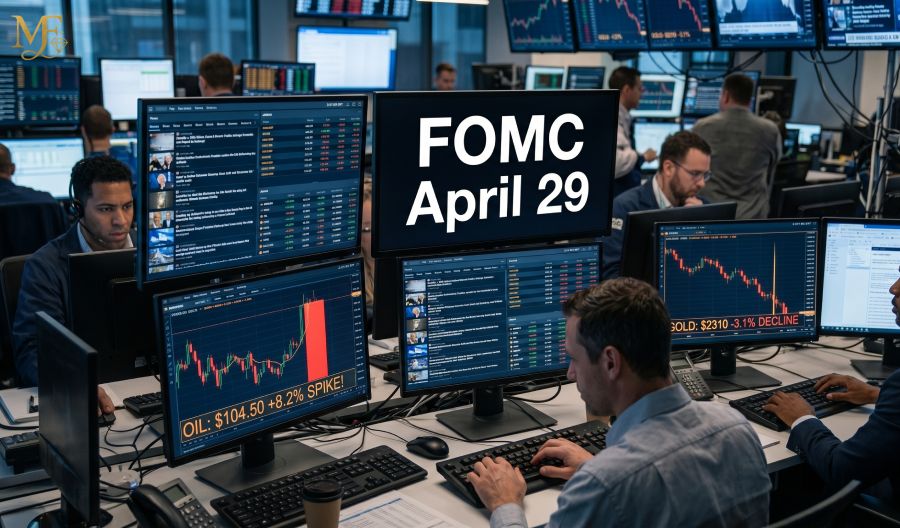
The week’s data confirms this. Trump’s “shoot and kill” order Thursday sent oil higher and gold lower. The Pentagon’s seizure of Iranian tankers in the Indian Ocean — now reaching as far as the Bay of Bengal — showed the conflict expanding geographically. A third carrier strike group arrived in the Gulf. And yet the FOMC probability of a rate hold next week sits at 99.5%. That hold, and any hawkish language from Powell, is what the gold market fears most right now — not the war itself.
Next week’s agenda: April 28–29 FOMC meeting and Powell press conference. April 30 — US Q1 GDP data and initial jobless claims. These are the true market-moving events. Gold at $4,710 is the price before the verdict. Institutions have not changed their long-term targets: J.P. Morgan $5,055 Q4 2026, Goldman Sachs $6,000 end 2027.